

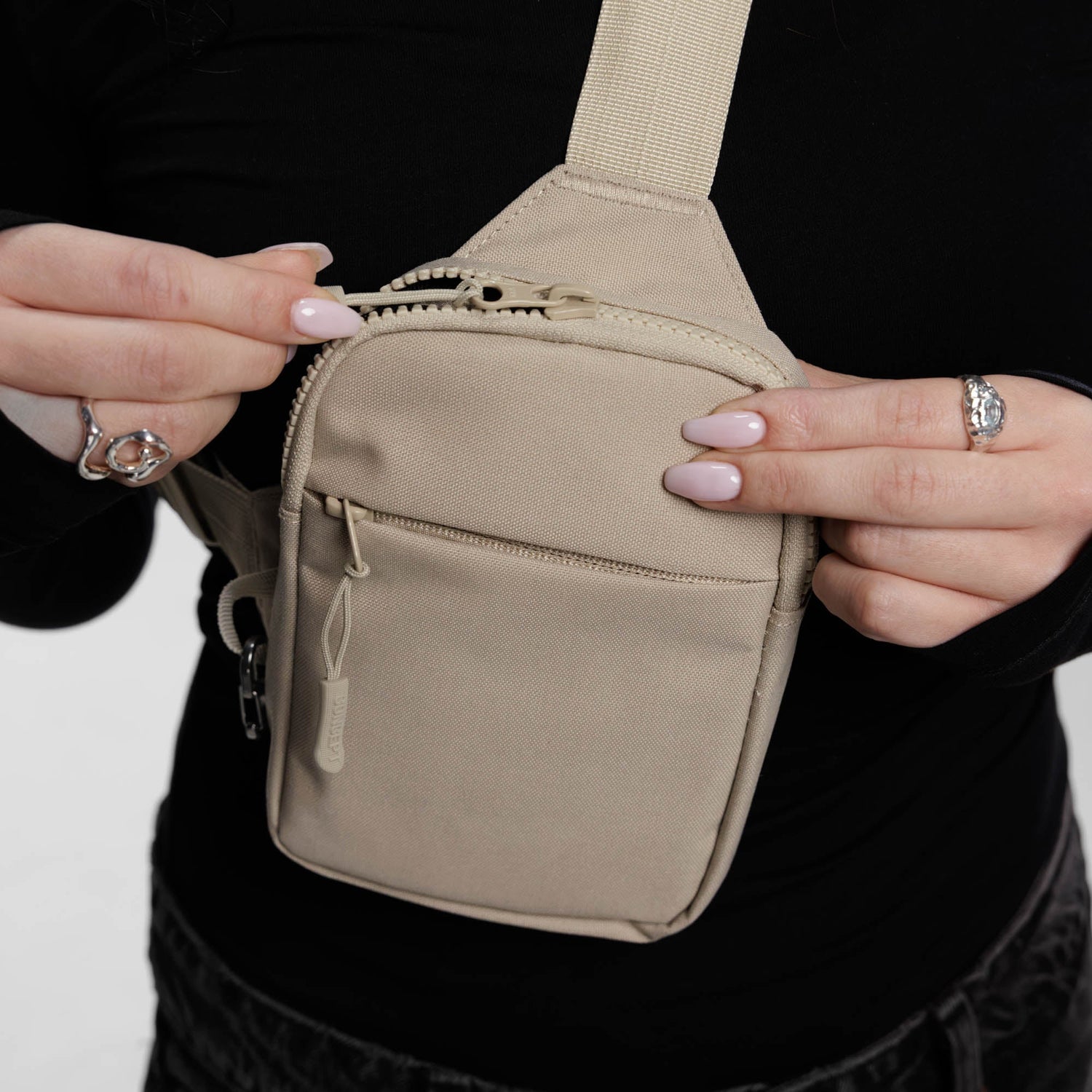
Sling bags and shoulder bags both keep your hands free and your gear close, but they sit on your body differently, carry differently, and suit different kinds of trips. If you are trying to decide between a sling bag and a shoulder bag for travel, here is everything you need to know.
Key Takeaways
- Sling bags sit diagonally across your chest or back on a single strap. Shoulder bags hang from one shoulder with the bag resting at your side or under your arm.
- Sling bags are harder for pickpockets to access because they sit tight against your body and can be worn on your chest. Shoulder bags hang looser and are easier to access from behind.
- Shoulder bags generally carry more and offer better organisation for longer days. Sling bags are slimmer, lighter, and better for active travel.
- Both styles can include anti-theft features, but sling bags are better positioned for security in high-risk destinations.
- How you wear your bag matters as much as which style you choose. A sling bag worn on your chest in a crowd is significantly more secure than a shoulder bag hanging at your side.
- Your trip style, what you need to carry, and how much security you need will decide which one works best for you.
What Is a Sling Bag?
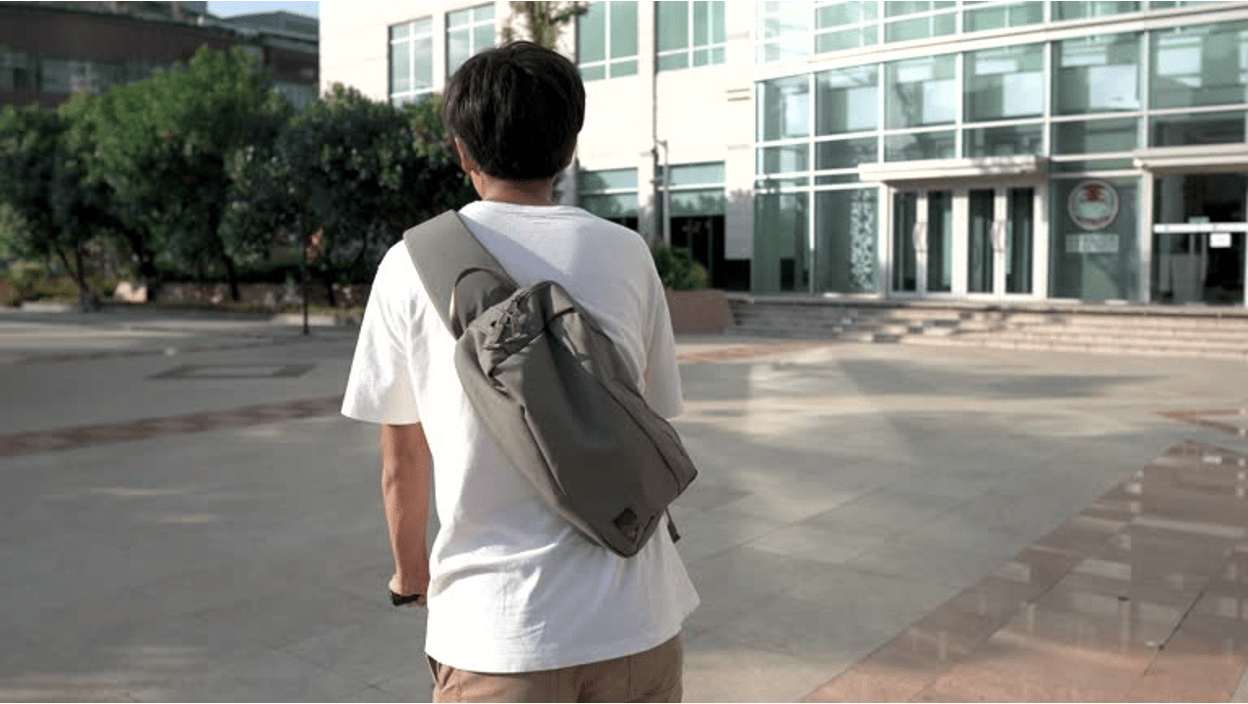
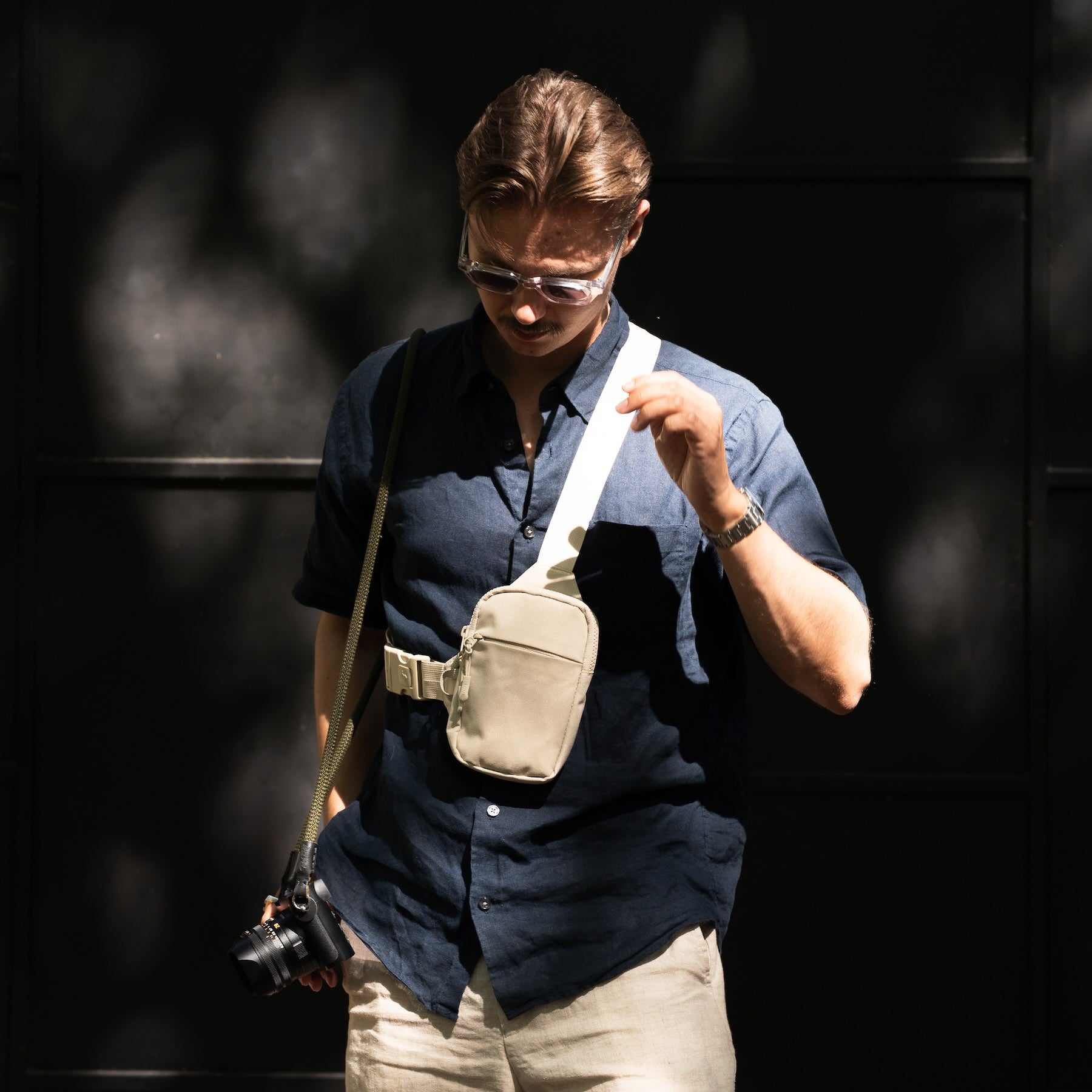
A sling bag is a compact, single-strap bag with a diagonal strap that runs from one shoulder across to the opposite hip. The bag sits flat against your chest or back depending on which way you wear it. It is slim, close to your body, and easy to swing to the front when you need to get into it quickly.
Most travel sling bags sit between 1L and 10L in capacity. The Concept Global Travel Sling Bag 2.0 is purpose-built for travel security with RFID-blocking fabric, a steel cable cut-resistant strap, a three-point locking buckle, YKK zippers, and a hidden back pocket that sits against your body. It comes in multiple sizes so you can pick the right carry for your trip.
If you're bringing your sling bag on a plane, RFID-blocking fabric doesn't interfere with airport security equipment and cut-resistant materials won't trigger metal detectors.
What Is a Shoulder Bag?
A shoulder bag is a bag that hangs from a single strap worn over one shoulder, with the bag resting at your side, under your arm, or at your hip. Unlike a sling bag's diagonal cross-body strap, a shoulder bag strap typically sits straight on one shoulder and the bag hangs vertically at your side.
Shoulder bags come in a wide range of sizes and styles, from slim document bags to larger totes. They are popular for everyday carry and casual travel because they are easy to take on and off and offer straightforward access to the main compartment.
If you want the shoulder carry style with added security features, shoulder sling bags bridge the gap between the two styles.
Sling Bag vs. Shoulder Bag: Side-by-Side
|
Sling Bag |
Shoulder Bag |
|
|
Position on body |
High, diagonal across chest or back |
Hangs at side or under arm from one shoulder |
|
Capacity |
Slim, 1L to 10L |
Wider range, suits more gear |
|
Security features |
Strong at premium end, natural chest carry |
Can include anti-theft features, less secure position |
|
Ease of access |
Fast swing to front |
Opens at side, natural but not always in sightline |
|
Comfort |
Diagonal weight distribution, moves with you |
Relaxed but can cause one-sided strain when heavy |
|
Organisation |
Good for daily essentials |
Better for multiple categories and longer days |
|
Style |
Travel-specific, technical |
Most versatile, widest range of styles |
|
Best for |
High-risk cities, active travel, security-focused trips |
Casual travel, moderate-risk settings, longer day carries |
Sling Bag vs. Shoulder Bag: Key Differences
How They Sit on Your Body
A sling bag sits high and close. The diagonal strap and slim profile keep the bag tight against your torso, whether on your chest or back. That close fit means less swing, less movement, and less opportunity for someone to access the bag without you noticing.
A shoulder bag hangs looser at your side or under your arm. The single-shoulder carry is more relaxed and easy to remove quickly, which is useful in some situations but creates a security gap in crowded areas. A bag hanging at your side in a busy market or metro is one of the easiest targets for opportunistic theft.
Security
Sling bags are better for travel security. Because they sit high and tight on your chest or upper back, it is physically difficult for a pickpocket to access your zippers without you noticing. Worn on your chest, the bag stays in your sightline at all times. The best anti-theft sling bags include RFID blocking, cut-resistant straps, lockable zippers, and hidden pockets, the same features that make a good travel sling bag secure.
Shoulder bags can also include anti-theft features like RFID blocking, cut-resistant straps, and lockable zippers, but the way they hang at your side limits how much those features can compensate for the position. A cut-resistant strap helps prevent bag snatching, but if the bag is hanging freely at your side, a determined thief still has easier access than with a chest-worn sling.
In high-risk cities like Rome, Barcelona, or Prague, wearing your bag on your chest is the single most effective thing you can do. A sling bag makes that habit natural. A shoulder bag makes it awkward.
Ease of Access
Sling bags are fast to access. One swing to the front and everything is right in front of you, visible and within reach.
Shoulder bags open at your side, which is natural and intuitive in low-risk settings. The problem is that in a crowd you are not always looking directly at the bag when you open it. That brief moment of distraction is exactly when pickpockets operate.
Capacity and Organisation
Shoulder bags generally carry more. Wider bodies accommodate more compartments and suit longer days where you are carrying a passport, travel cards, phone, portable charger, and a light layer. A large tote-style shoulder bag can hold significantly more than any sling bag.
Travel sling bags are slimmer by design. They carry everything you need for a full day out without bulking up, but they are not built for extended carries where you need multiple separate pockets for different categories of gear.
Comfort
Both styles are comfortable for a full day of walking when they are not overloaded and fit properly.
Shoulder bags can feel more comfortable for casual everyday wear because the fit is relaxed and the bag is easy to move around. Over a long day of walking, a shoulder bag can cause strain on one side if it is heavily loaded because all the weight sits on a single shoulder without the counterbalancing effect of a diagonal strap.
A well-adjusted sling bag distributes weight diagonally across the torso, which many people find more comfortable for sustained walking. It also moves with you rather than shifting around as you walk.
Style
Shoulder bags come in the widest range of styles of any bag category. From canvas totes to structured leather bags, there is a shoulder bag for virtually every setting. Many shoulder bags work just as naturally at dinner or a business meeting as they do on a walking tour.
Sling bags tend to look more travel-specific and technical, which works in your favour in busy tourist areas. For something more refined, leather sling bags sit naturally in smarter settings without reading as a dedicated travel piece.
When a Sling Bag Is the Better Choice
- You are travelling in a high-risk pickpocket destination and want your bag on your chest at all times
- You want a slim, lightweight option that moves with you without shifting around
- You are covering a lot of ground on foot and want something close to your body
- You want a bag that swings to the front instantly when you need to access it in a crowd
- You want one piece that works from the airport to the street without standing out
When a Shoulder Bag Is the Better Choice
- You need to carry more than a sling bag can hold comfortably
- Your destination is moderate risk and you are comfortable with a side carry
- You want a bag that works across very different settings including more dressed-up occasions
- You want the widest possible range of style options
- You prefer a more relaxed carry for casual day trips
Can You Use a Sling Bag as a Shoulder Bag?
Yes. A sling bag worn with a longer strap and positioned lower at your side functions similarly to a shoulder bag. Most travel sling bags have fully adjustable straps, which means you can wear them high on the chest for maximum security in a crowded area, or lower at the side for a more relaxed fit when you are in a safer setting.
That versatility is one of the reasons a quality sling bag works across different trip styles.
How to Style a Sling Bag for Travel
Chest carry in busy areas. Wear the bag across your chest with the pouch sitting at the front. This is the most secure position in crowded streets and transit hubs, and it looks clean and intentional.
Back carry when you are relaxed. Swing it around to your back when you are sitting down for a meal or in a lower-risk setting. It gets out of the way without coming off.
Keep it slim. Only pack what you actually need for the day. A flat, close-fitting sling looks sharp. An overstuffed one loses the whole silhouette.
Neutral colours travel furthest. Black, olive, and navy work with almost everything and draw less attention in busy areas. For something more refined, leather sling bags sit naturally in smarter settings without reading as a travel piece.
How to Style a Shoulder Bag for Travel
Wear it across your body when security matters. Most shoulder bags can be worn crossbody rather than straight off one shoulder. That simple adjustment significantly improves security in crowded areas.
Match it to the setting. Canvas shoulder bags suit casual travel days. A structured leather option works just as well at dinner as it does on the street.
Keep the strap at the right length. Too long and the bag drifts behind you. Adjust it so the bag sits at your front or side where you can always see it.
Neutral tones are the most versatile. Black, tan, and brown blend into most outfits and do not draw unnecessary attention in busy tourist areas.
Still Deciding?
If you are still not sure which style suits your trip, it is worth reading how a sling bag compares to a crossbody bag and how it stacks up against a messenger bag for travel. Both comparisons cover similar ground from a different angle and might help clarify which carry style suits your trip best.
Frequently Asked Questions
Is a sling bag safer than a shoulder bag for travel?
Generally yes. A sling bag worn on your chest sits tight against your body and stays in your sightline, making it significantly harder for a pickpocket to access. A shoulder bag hanging at your side is easier to access from behind in a crowd.
Which carries more, a sling bag or a shoulder bag?
Shoulder bags typically carry more and offer better internal organisation. Sling bags are slimmer and better suited to carrying daily essentials efficiently rather than everything for a multi-day trip.
Can a shoulder bag be used as a travel bag?
Yes, particularly in lower-risk destinations or for day trips where security is less of a concern. In high-risk cities, wearing it crossbody rather than off one shoulder improves security significantly.
What size sling bag is best for a day trip?
A regular or large size covers a full day out comfortably. The small sling bags work well for lighter carries where you only need your phone, wallet, and a few essentials.
Do sling bags count as a personal item on a plane?
Yes. A sling bag is typically counted as a personal item by airlines. It fits under the seat in front of you and travels through security without any issues.
Which is more comfortable for a long day of walking?
A well-adjusted sling bag distributes weight diagonally across the torso, which many people find more comfortable for sustained walking than a shoulder bag that places all the weight on one shoulder.

Leave a comment
This site is protected by hCaptcha and the hCaptcha Privacy Policy and Terms of Service apply.